Introduction
Addiction is not just a physical dependence on alcohol, drugs, or other substances. It affects the mind, emotions, and overall well-being of an individual. That is why a purely medical approach to de-addiction is often not enough. True recovery comes when the mind, body, and soul are healed together.
This is where holistic healing practices—such as yoga, meditation, and counseling—play a vital role in Nasha Mukti Kendras. These methods not only help people overcome cravings but also teach them how to manage stress, emotions, and life’s challenges without returning to substance use.
In this blog, we will explore how these three pillars of holistic healing—yoga, meditation, and counseling—help individuals on their journey from addiction to recovery.
The Need for Holistic Healing in De-Addiction
Beyond Detoxification
Medical detox is the first step in any rehabilitation program. It removes harmful substances from the body. However, detox alone cannot prevent relapse. A person may still struggle with stress, anxiety, low self-esteem, or unresolved trauma.
Addressing the Root Cause
Most addictions stem from deeper issues:
- Emotional pain or past trauma
- Stressful environments
- Peer pressure or lack of self-control
- Mental health disorders like depression or anxiety
Holistic healing targets these root causes, ensuring recovery is long-term and sustainable.
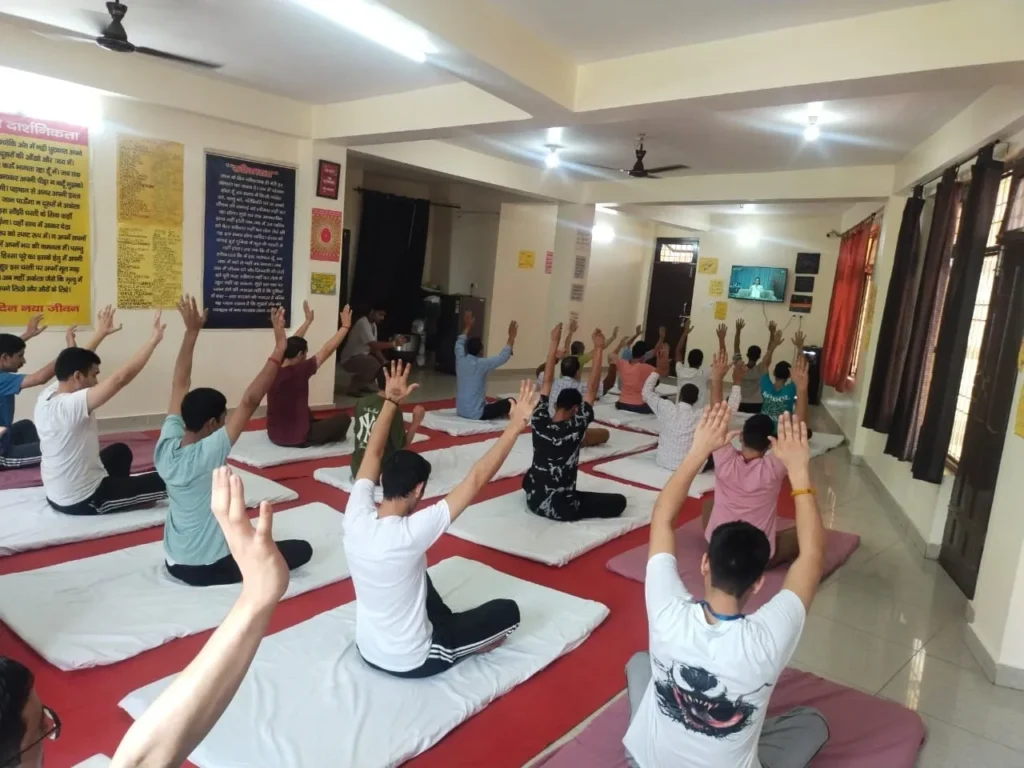
Yoga in Nasha Mukti Kendras
Why Yoga?
Yoga is an ancient practice that connects the mind, body, and breath. For people in recovery, yoga provides a natural way to reduce stress, regain control over the body, and restore balance.
Benefits of Yoga in De-Addiction
- Reduces Cravings: Regular practice lowers stress hormones, which often trigger relapse.
- Improves Physical Health: Addiction damages the liver, lungs, and nervous system. Yoga postures help restore physical strength.
- Enhances Mental Clarity: Breathing exercises calm the mind and improve focus.
- Boosts Self-Discipline: Practicing yoga builds patience and resilience.
Common Yoga Practices in Rehab
- Pranayama (Breathing Techniques): Helps manage withdrawal anxiety.
- Surya Namaskar (Sun Salutation): Improves flexibility and energy.
- Shavasana (Corpse Pose): Induces deep relaxation and reduces stress.
- Anulom Vilom (Alternate Nostril Breathing): Balances emotions and thoughts.
Meditation in Nasha Mukti Kendras
The Power of a Calm Mind
Addiction thrives in chaos. Meditation, by calming the mind, reduces restlessness and helps individuals reconnect with themselves.
Benefits of Meditation in Recovery
- Controls Negative Thoughts: Meditation prevents the mind from wandering into guilt, anger, or cravings.
- Improves Emotional Balance: Helps individuals manage mood swings and stress.
- Strengthens Willpower: Regular meditation builds mental discipline, reducing relapse chances.
- Creates Self-Awareness: Helps people reflect on their triggers and learn healthier responses.
Types of Meditation Practiced in Rehab
- Mindfulness Meditation: Focuses on the present moment, reducing anxiety about the past or future.
- Guided Meditation: Instructors guide patients with calming words and imagery.
- Mantra Meditation: Repetition of positive affirmations builds inner strength.
- Transcendental Meditation: Helps achieve deep relaxation and mental clarity.
Counseling in Nasha Mukti Kendras
The Role of Counseling in Recovery
Counseling is often the backbone of any de-addiction program. While yoga and meditation calm the body and mind, counseling addresses the emotional and psychological struggles behind addiction.
Types of Counseling
- Individual Counseling
- One-on-one sessions with a therapist.
- Focuses on personal struggles, trauma, and triggers.
- Provides a safe, non-judgmental space to share feelings.
- Group Counseling
- Builds peer support by sharing experiences with others.
- Reduces isolation and promotes empathy.
- Encourages accountability and motivation.
- Family Counseling
- Addiction affects the entire family, not just the individual.
- Helps rebuild trust, improve communication, and heal relationships.
Benefits of Counseling in Nasha Mukti Kendras
- Helps identify triggers and develop coping strategies.
- Builds self-esteem and confidence.
- Provides emotional support during withdrawal and recovery.
- Prevents relapse by teaching long-term skills for life challenges.
The Power of Combining Yoga, Meditation, and Counseling
When practiced together, yoga, meditation, and counseling form a complete healing system.
- Yoga strengthens the body and builds resilience.
- Meditation calms the mind and reduces stress.
- Counseling addresses emotions, relationships, and mental health.
This combination ensures that recovery is not just about quitting substances, but about creating a healthy, fulfilling lifestyle.
Real-Life Impact of Holistic Healing
Consider an example:
- A person struggling with alcohol addiction undergoes medical detox.
- Through yoga, they regain physical strength and energy.
- With meditation, they learn to control cravings and manage anxiety.
- In counseling, they confront past traumas and rebuild family bonds.
Such an approach not only helps them stay sober but also gives them tools for a better life.
Challenges in Adopting Holistic Healing
While holistic methods are effective, there are challenges:
- Lack of awareness among families and patients.
- Misconceptions that yoga or meditation alone can cure addiction.
- Shortage of trained professionals in some centers.
However, with increasing awareness and government initiatives, more Nasha Mukti Kendras are adopting these practices.
How Families Can Support Holistic Healing
- Encourage loved ones to actively participate in yoga and meditation.
- Join family counseling sessions to understand the recovery journey.
- Create a supportive home environment free of triggers.
- Celebrate small milestones to boost confidence.
The Future of De-Addiction in India
As more people recognize addiction as a medical and psychological issue, the demand for holistic healing is growing. Nasha Mukti Kendras are evolving from being just detox centers to complete wellness hubs. With proper integration of yoga, meditation, and counseling, the success rates of long-term recovery are expected to rise significantly.
Conclusion
Addiction recovery is not just about quitting a substance—it’s about rebuilding life with strength, clarity, and purpose. Yoga, meditation, and counseling provide the essential tools to achieve this transformation.
By embracing holistic healing, Nasha Mukti Kendras empower individuals to not only overcome addiction but also rediscover peace, balance, and happiness in life.
Seeking help is not a weakness; it is a courageous step toward a brighter, healthier future. And with holistic healing, that future becomes truly sustainable.